Benefits of Using Debt in a Transaction
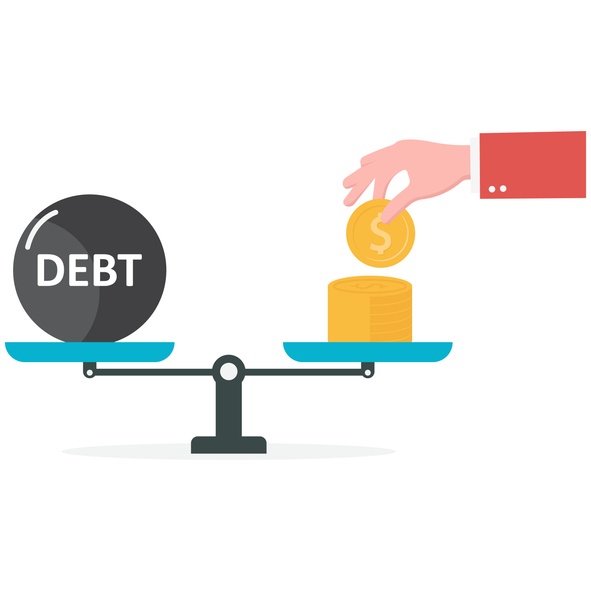
Using debt (borrowing) to finance a leveraged buy-out is often maligned by the media or politicians and frequently positioned as risky, destructive, or even dangerous. Others view the tax deductibility of interest payments to be unfair or bad for society. (I never hear these same people saying the taxes paid on interest income to be destructive or bad for society – but that is a discussion for another post.)
Sayings like: “Neither a borrower nor a lender be” ring true to many people. Great Americans like Benjamin Franklin and Andrew Jackson have been quoted as saying “I’d rather go to bed supperless than rise in debt” and “when you get in debt you become a slave.”
1719 Partners believes that debt, when properly used, is an important and useful tool. If the capital structure is poorly organized and if the business unexpectedly underperforms, leverage can compound problems. But if done right, there are benefits to leverage.
[Note: This post does not look at the negatives of leverage or how to determine the proper capital structure. This post simply looks at the benefits of leverage assuming that it is the right capital structure and that the business performs to expectations.]
As proponents of leverage, 1719 Partners sees four main benefits of using term debt to finance a portion of a transaction’s purchase price.
Benefit #1: Interest Tax Shields
Because interest expense is deductible for income tax purposes, paying interest lowers your income tax liability. Sophisticated financiers can determine the expected net present value of the income tax shield associated with the interest payments.
While a 1719 Partners’ portfolio company gets to deduct the interest tax expense, it is important to note that this benefit does not really accrue to the portfolio company– it generally accrues to the person who sold the business to 1719 Partners. Why? Because the tax deductibility of interest payments is universal and available to all buyers. Since all buyers have access to the value of the interest tax shield, all buyers are willing to increase their purchase price by a like amount. So the interest tax shield benefits accrue to the business seller. Don’t believe me? There are many excellent academic studies confirming this point. Here is an abstract from an Oxford Business School study for your enjoyment.
“Tax savings associated with increased levels of debt are often thought to be an important source of returns for private equity funds conducting leveraged buyouts (LBOs). However, as leverage is available to all bidders, the vendors may appropriate any benefits in the form of the takeover premium. For the 100 largest U.S. public-to-private LBOs since 2003, we estimate the size of the additional tax benefits available to private equity purchasers. We find a strong cross-sectional relationship between tax savings and the size of takeover premia; and on average the latter are around twice the size of the former. Consequently, the tax savings from increasing financial leverage essentially accrue to the previous shareholders rather than the private equity fund that conducts the LBO. It is, therefore, unlikely that (ex ante predictable) tax savings are an important source of returns for private equity funds. Furthermore, policy proposals that aim to restrict leverage or the tax deductibility of debt are likely to have their impact mainly on existing owners of companies.”
Benefit #2: Less Equity At Risk – So Equity Returns Can Be Higher
This is just simple math. Let’s assume you buy a company for $2 and sell it for $3 in 5 years. (To make this problem simpler, let’s also assume there are no distributions at all during the 5 year period and that the debt is not amortized.) If you financed this transaction with 100% equity, you generated a 50% return over five years, or an annualized return of about 8.5%.
Now, let’s assume that when you buy the company for $2, you borrow $1.50 from a bank and invest $0.50 in equity. When you sell the company in 5 years for $3, you take $1.50 of the proceeds and pay back the bank, leaving $1.50 for the equity owners. Since you invested $0.50 and the equity is now worth $1.50, this is a 200% return over 5 years, or an annualized return of about 24.5%.
Obviously a 24.5% annual rate of return is significantly better than an 8.5% annual rate of return.
Benefit #3: Debt Reduces Bad Decisions by Management/Governor on Cash
While 1719 Partners provides active oversight of its portfolio companies, it does not manage any of its companies on a day to day basis. Day to day management of each business is the responsibility of our partners managing the business.
We implicitly trust our partner management teams and we believe we have some of the best operators out there running our companies. However, we also believe that the obligation to meet a defined principal amortization schedule is an excellent motivational tool and helps management teams prioritize uses of capital. Projects with a potentially low rate of return are not funded– only the best uses of capital receive funding.
Benefit #4: Portfolio Company Lenders Are Our Partners– Deal Confirmation
1719 Partners has established many excellent and long-term relationships with debt financing partners. We view these organizations as our partners in each transaction. If we are excited about a deal, 9 times out of 10, so are our debt partners. However, occasionally our lending partners balk at a transaction we find attractive. We trust our financing partners and we know they have good judgment. If they don’t like a deal it makes us ask what they see that we don’t. While we can still complete the transaction without them (either by finding other lenders or putting in more equity) we have learned over the years that supportive lenders usually signal a good transaction.
Would you like to learn more about our approach to debt? Feel free to contact us.

